



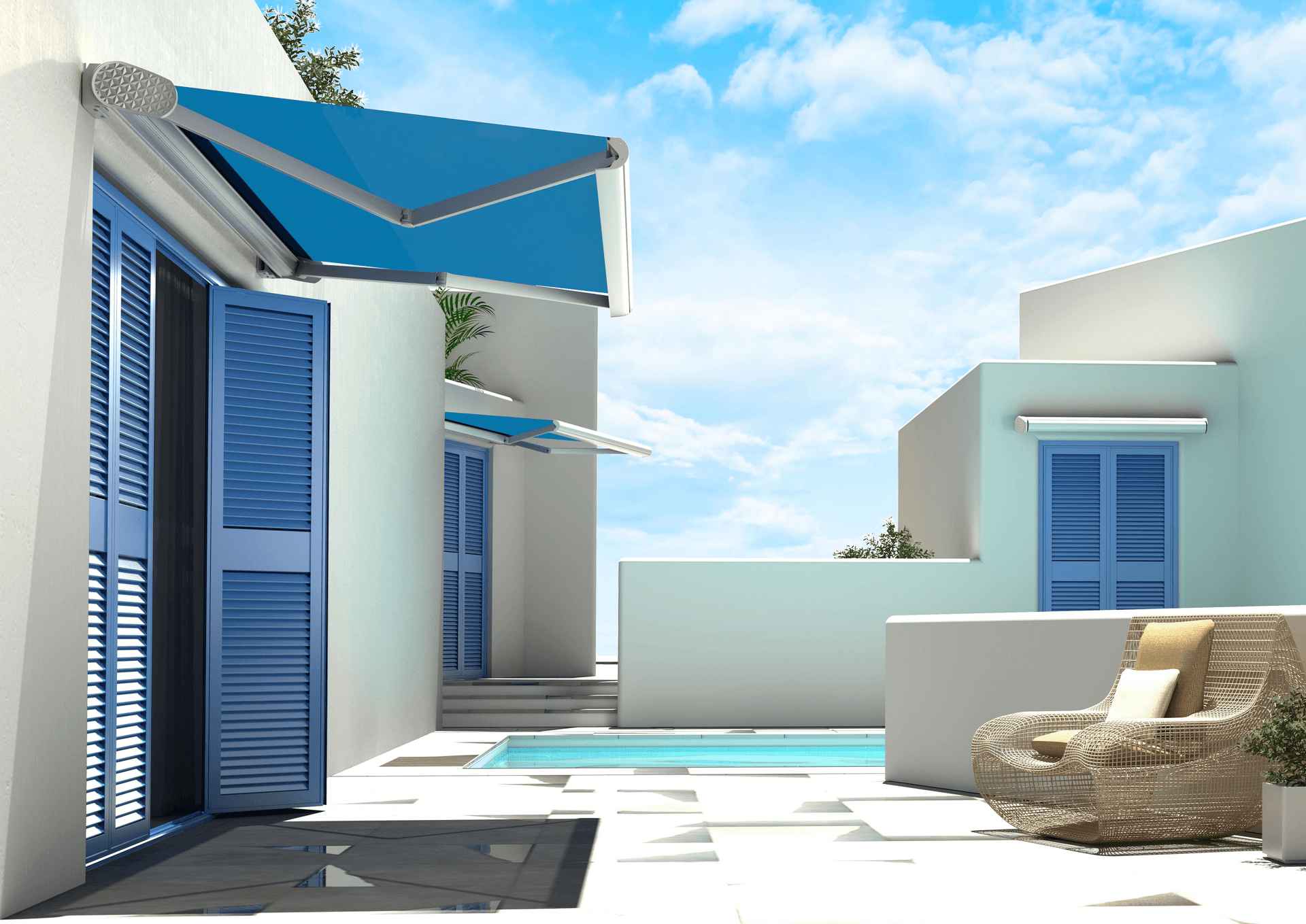
STRUGAL Sun Protection: Energy Efficiency and Savings
With summer temperatures rising, homes are increasingly reliant on air conditioning. That is why solar shading is establishing itself as a highly effective passive strategy. It helps lower indoor temperatures without increasing electricity consumption.
Sun protection improves thermal comfort without affecting your energy bill.
Awnings, pergolas, louvers, or exterior shading systems act before solar radiation reaches windows and facades. They reduce the temperature inside buildings, and with it, the need for air conditioning.
Studies show that external sun protection can reduce cooling demand by between 18% and 45%. In cities with intense heat, such as Madrid or Seville, the use of urban awnings achieves significant energy savings. This occurs by reducing solar radiation on the pavement and building facades
External sun protection: how to reduce heat, energy consumption, and your electricity bill
When short-wavelength sunlight enters a room, it is absorbed by the interior surfaces and converted into long-wavelength infrared radiation. It cannot easily escape through the glass, creating a "greenhouse effect" that causes the internal temperature to rise uncontrollably.
It is crucial to block the radiation before it passes through the glass.
External sun protection solutions, such as awnings and zip screens,
act as the “skin” of the building, regulating this heat exchange
passively.
Solar protection not only helps lower room temperatures by several degrees, but
also contributes to a more sustainable and efficient home. It leads to
significant energy savings.
The residential sector consumes approximately 20% of the planet’s total primary energy. Within this consumption, more than 50% is allocated to heating, cooling, and lighting.
By reducing the need for cooling, less energy is used. This reduces the use of HVAC equipment, which is reflected in your electricity bill. Sun protection is a simple, adaptable, and effective measure that allows you to live in cooler spaces, reduce costs, and move toward a model of responsible consumption.
For a residential home, sun protection solutions represent an investment with a clear return:
- Reduction in heat flow: awnings can reduce annual HVAC (heating and air conditioning) energy consumption by an average of 15%.
- kWh savings: savings of up to 1,034 kWh have been recorded in standard single-family homes thanks to adequate sun protection.
- Immediate thermal comfort: a patio protected by an awning can reduce its ambient temperature by between 1°C and 2°C. It also prevents the interior of the home from reaching critical peaks of up to 38°C due to direct radiation.
| Appearance | Home with sun protection | Home without sun protection |
|---|---|---|
| Cooling demand | Reduction of between 18% and 45% through the use of awnings. | Maximum and constant demand on mechanical air conditioning systems. |
| Thermal performance | Reduction in average temperature of between 1°C and 2°C in immediate outdoor areas. | Indoor temperatures that can reach 30°C - 32°C in summer. |
| Economic profitability | Monthly savings of up to 32% on utility bills are estimated if shading systems are installed. | In a 90 m² home, the estimated annual cooling cost is around €550–600. |
| Sustainability and ecology | Reduction in greenhouse gas emissions (CO2) by between 50% and 70%. | Accounting for up to 25% of the total environmental pollution emitted by the building. |
How to Choose an Awning That Withstands Wind
An awning's wind resistance is characterized by its ability to withstand specific loads that simulate wind pressure and suction. This wind resistance is classified on a scale ranging from Class 1 (lowest resistance) to Class 6 (highest resistance).
| Class | 0 | 1 | 2 | 3 | 4 | 5 |
|---|---|---|---|---|---|---|
| Wind pressure (Pa) | - | 40 Pa | 70 Pa | 110 Pa | 170 Pa | 250 Pa |
| Wind speed (km/h) | N/A | < 30 km/h | 30 - 38 km/h | 39 - 49 km/h | 50 - 61 km/h | 62 - 74 km/h |
| Classification | No wind | Light | Moderate | Strong | Very Strong | Storm |
Wind resistance classes when awnings are tested according to EN 13561.
The height at which you live is an important factor when choosing sun protection.
The higher the awning or screen is installed, the fewer natural obstacles there are. Other buildings, trees, and the urban landscape slow down the wind before it reaches it. This has direct consequences for the system: not only in terms of its durability, but also in the level of resistance it must meet according to the EN 13561 standard.
On lower floors, the urban environment acts as a natural filter. The wind arrives less intense and with less turbulence, which reduces the technical demands on the sun protection system.
As one ascends in height, this sheltering effect disappears: the airflow becomes more constant, more direct, and unpredictable.
On upper floors and in attics, pressure and suction phenomena are added to this increased wind speed, which can subject the system to considerable stress.
This is especially true on highly exposed facades or in areas with frequent winds, such as Tarifa, A Coruña, Zaragoza, Pamplona, or Almería.
Sun protection systems must be designed to withstand high dynamic loads and anchored according to rigorous structural criteria.
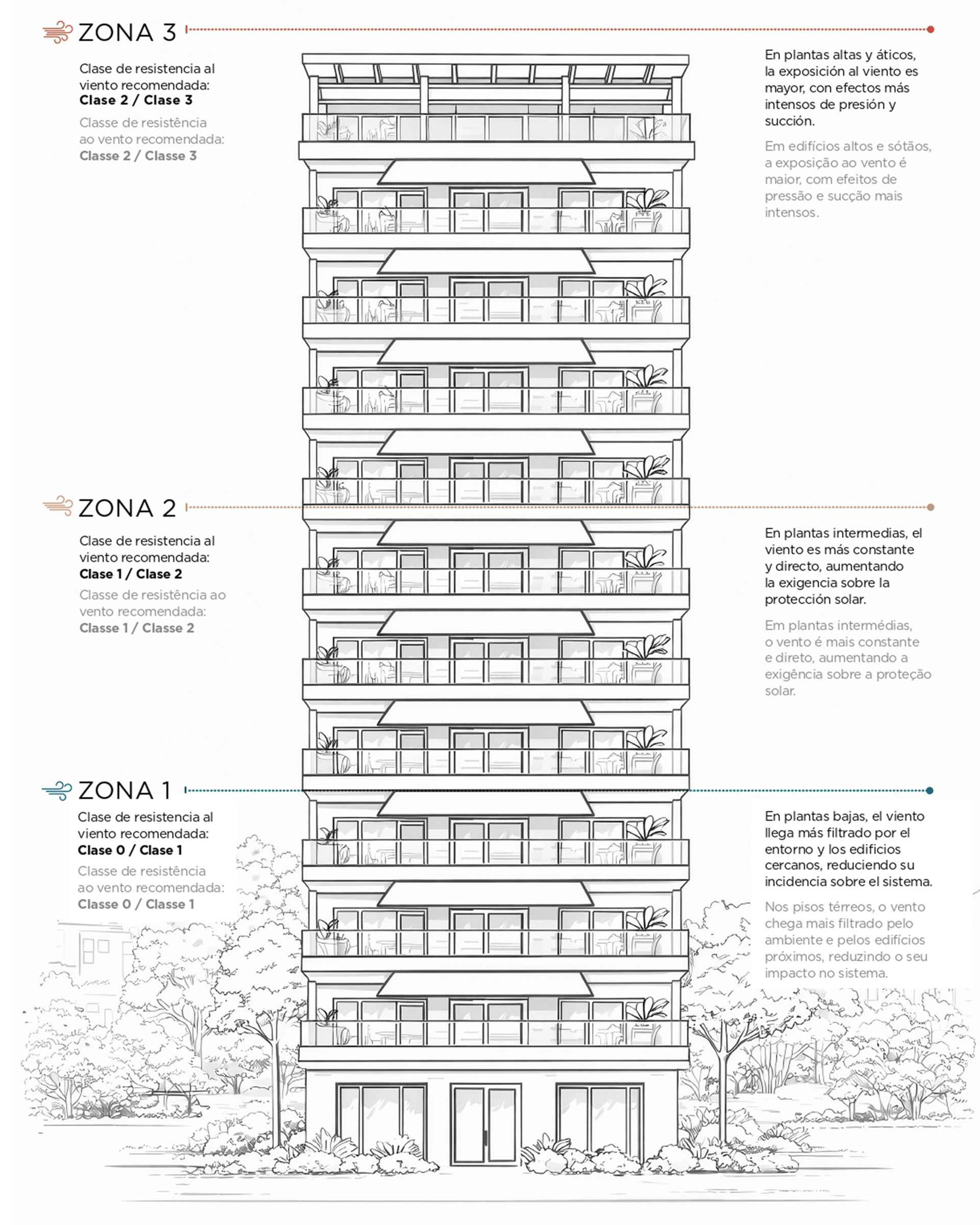
That is why choosing a resistance class suitable for your building is not just a matter of compliance with regulations: it ensures that the sun protection works well on a day-to-day basis and holds up when the weather turns rough.
Home Automation: The Brain Behind Bioclimatic Efficiency
One of the greatest advances in contemporary architecture is the integration of home automation as an ally of bioclimatic strategies. Home automation is not just automation; it is the set of technologies applied to smart control that enables optimal energy management, providing comfort and communication.
How does home automation maximize solar shading?
- Comprehensive solar tracking: Smart systems allow awnings and blinds to deploy automatically based on the actual angle of the sun on the facade. Using light (LDR) and temperature sensors, the system determines the optimal opening to ensure shade only when thermally necessary.
- Safety protocols: To prevent damage from adverse weather conditions, home automation integrates wind and rain sensors. For example, a standard protocol automatically retracts protective systems when wind speeds exceed 40 km/h.
- Climate control management: The smart system can coordinate the opening of windows with the shutdown of the air conditioning. This optimizes cross-ventilation when the outdoor temperature is favorable.
- Quantifiable savings: It is estimated that the use of well-programmed home automation equipment can reduce energy consumption in a home. The average additional reduction is 10%.
Lower temperature, greater savings
Sun protection isn’t just a way to increase comfort in the summer. It helps reduce costs by lowering electricity consumption.
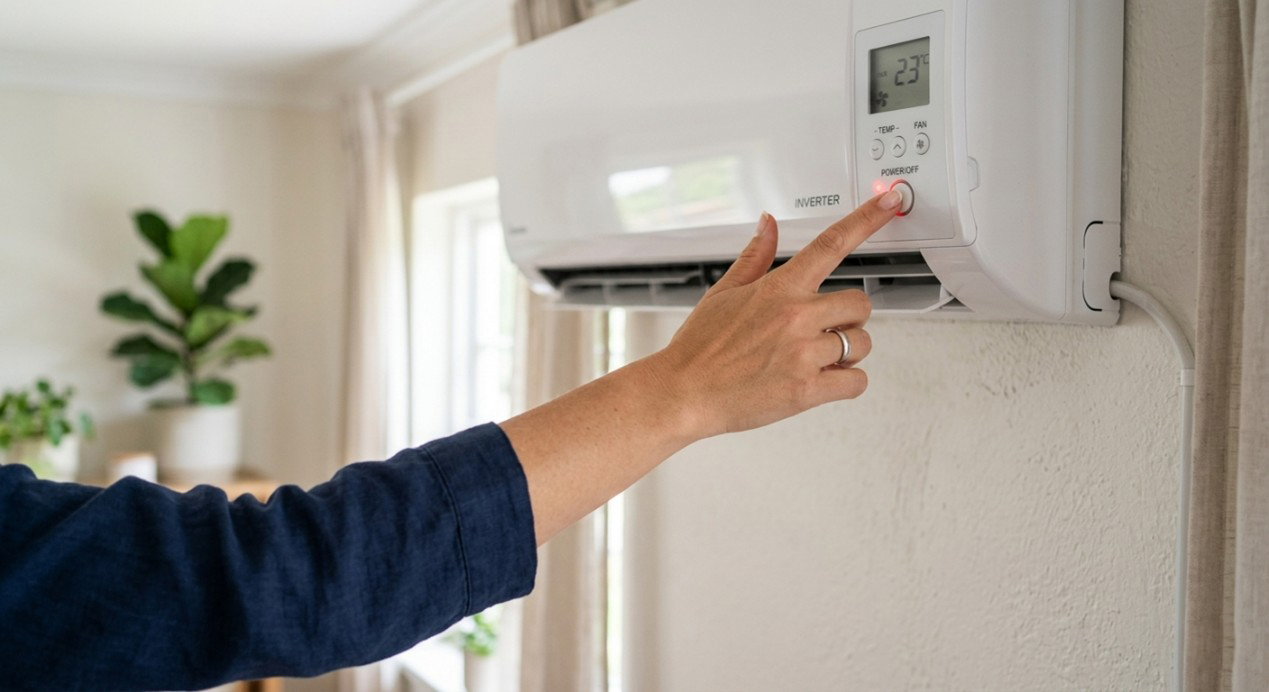
Here are some of the main benefits of incorporating it into residential buildings:
- Demand reduction: the use of awnings on facades with high solar exposure can reduce cooling demand by between 18% and 45%.
- Total net savings: the comprehensive application of bioclimatic criteria allows for energy savings of up to 70% compared to traditional construction.
Although the initial cost overrun may be around 15%, the net savings over the building’s lifespan are approximately 20%. - Environmental benefit: homes with bioclimatic solutions and architecture can reduce the emission of polluting gases into the atmosphere by between 50% and 70%.
STRUGAL Solutions: Expanding the Possibilities of Your Project
We have developed a range of sun protection solutions that align perfectly with the standards of bioclimatic architecture and advanced home automation.
Awnings
They help reduce heat and glare, creating cooler, more comfortable, and energy-efficient environments. At STRUGAL, we offer a wide range of awnings tailored to your needs, including:
ST. 6 PLUS COFFER
Combines design with easy installation.
Depending on the treatment applied to the base, the technical fabric can be waterproof, fire-resistant, thermally insulating, breathable, etc.
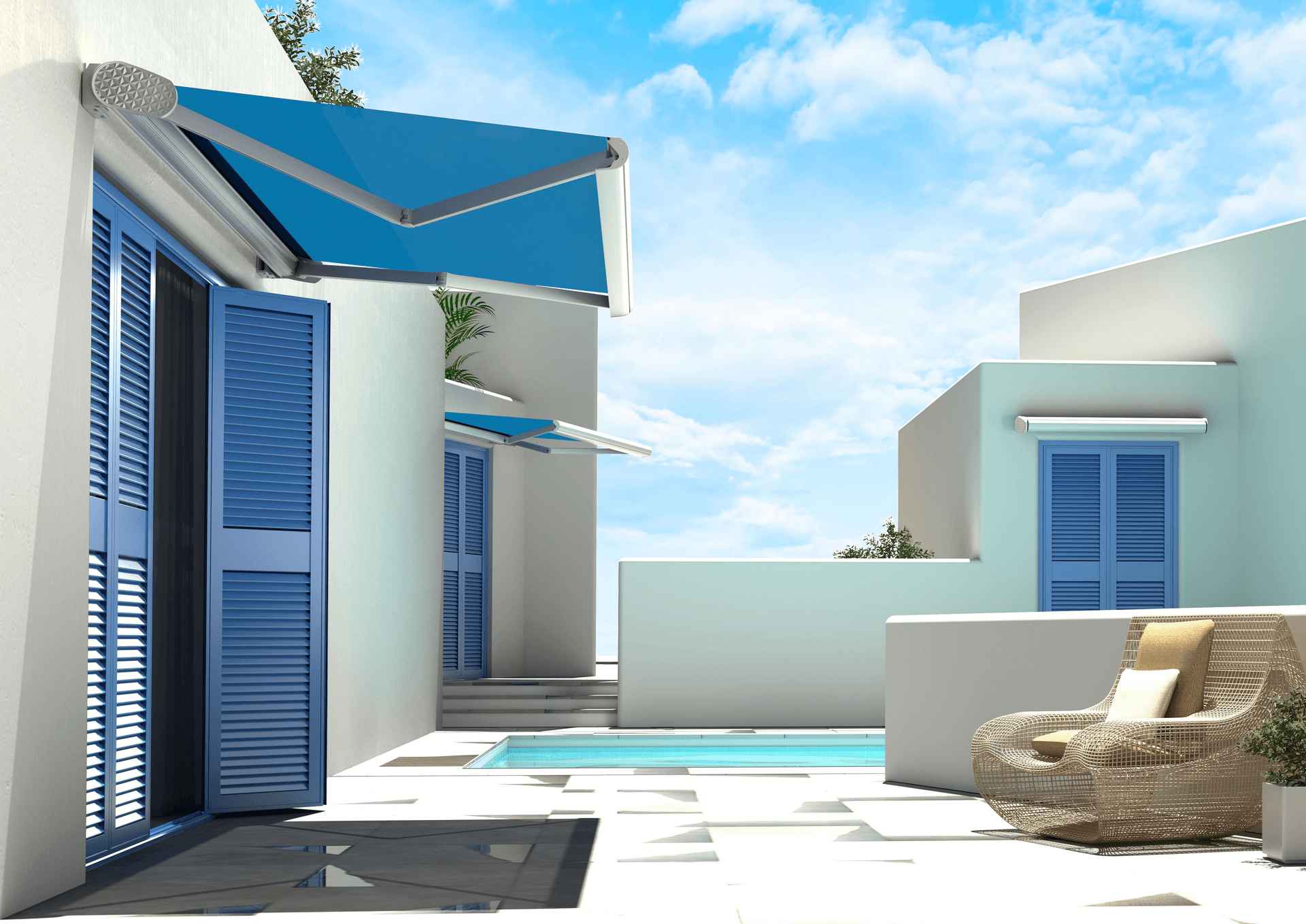
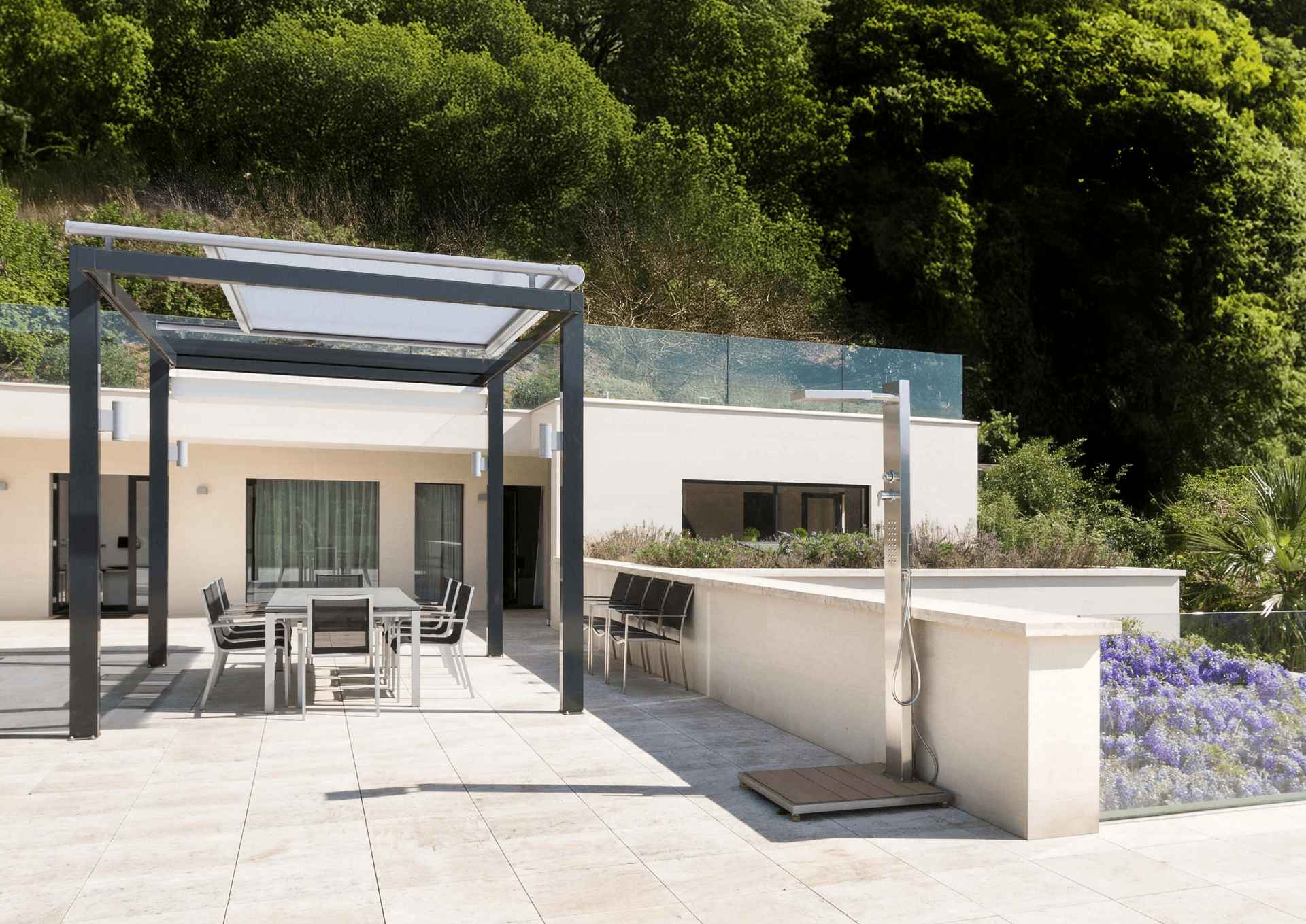
ST. 18 VERANDA
A versatile and elegant solution that offers excellent sun and heat protection for all types of outdoor spaces. Ideal for glass roofs and skylights, it also adapts perfectly to porches, pergolas, terraces, and glass-enclosed areas. Its guided system ensures the fabric is always taut, providing greater wind resistance, comfort, and durability.
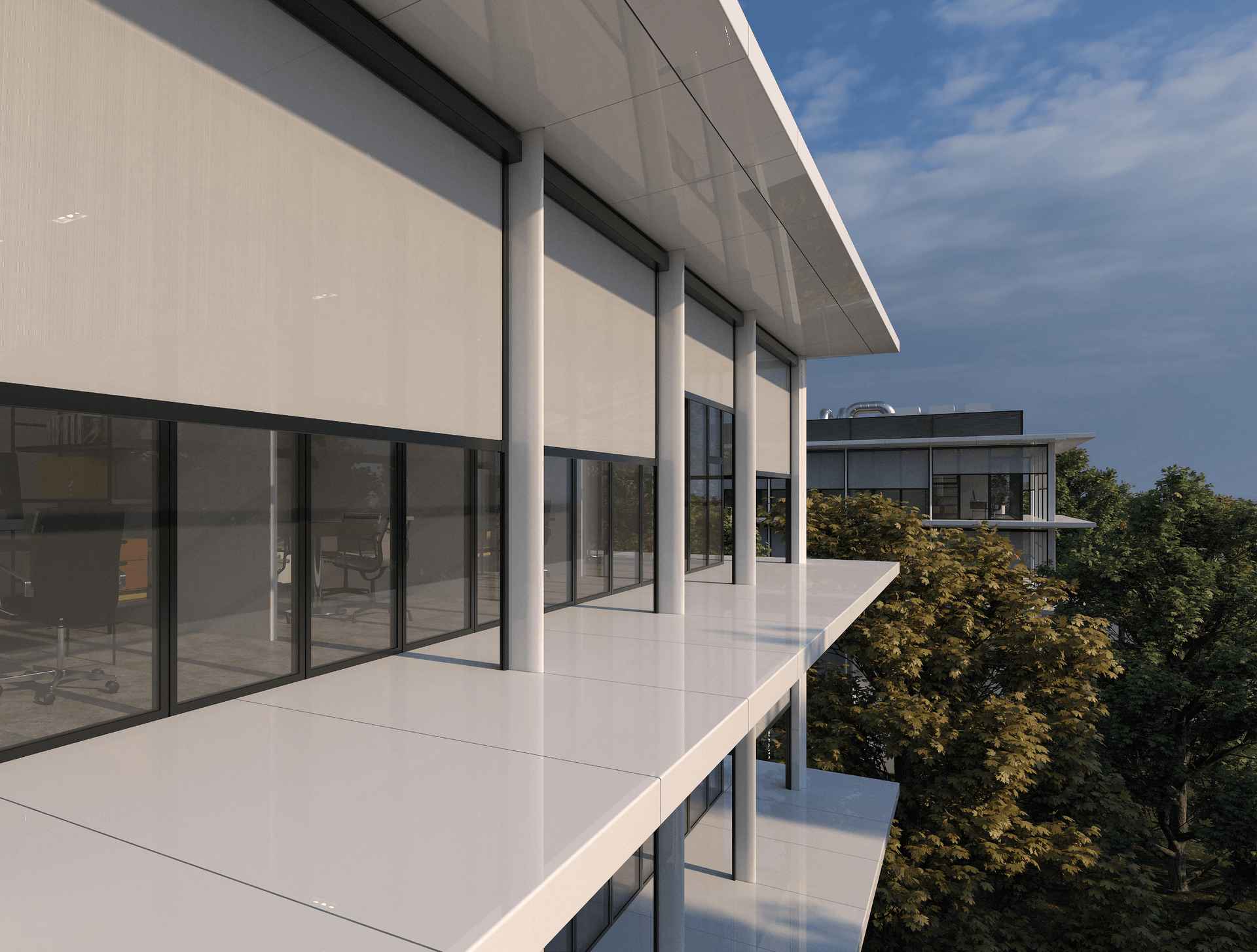
Vertical systems
A vertical design structure suitable for both outdoor and indoor installation that allows you to control sunlight and temperature within the space. A zipper-guided system that keeps the fabric securely housed within the side profiles, providing excellent wind resistance.
ST. 10 SCREEN ZIP
A zip-guided system that ensures the fabric is always housed inside the side profiles, achieving high wind resistance values.
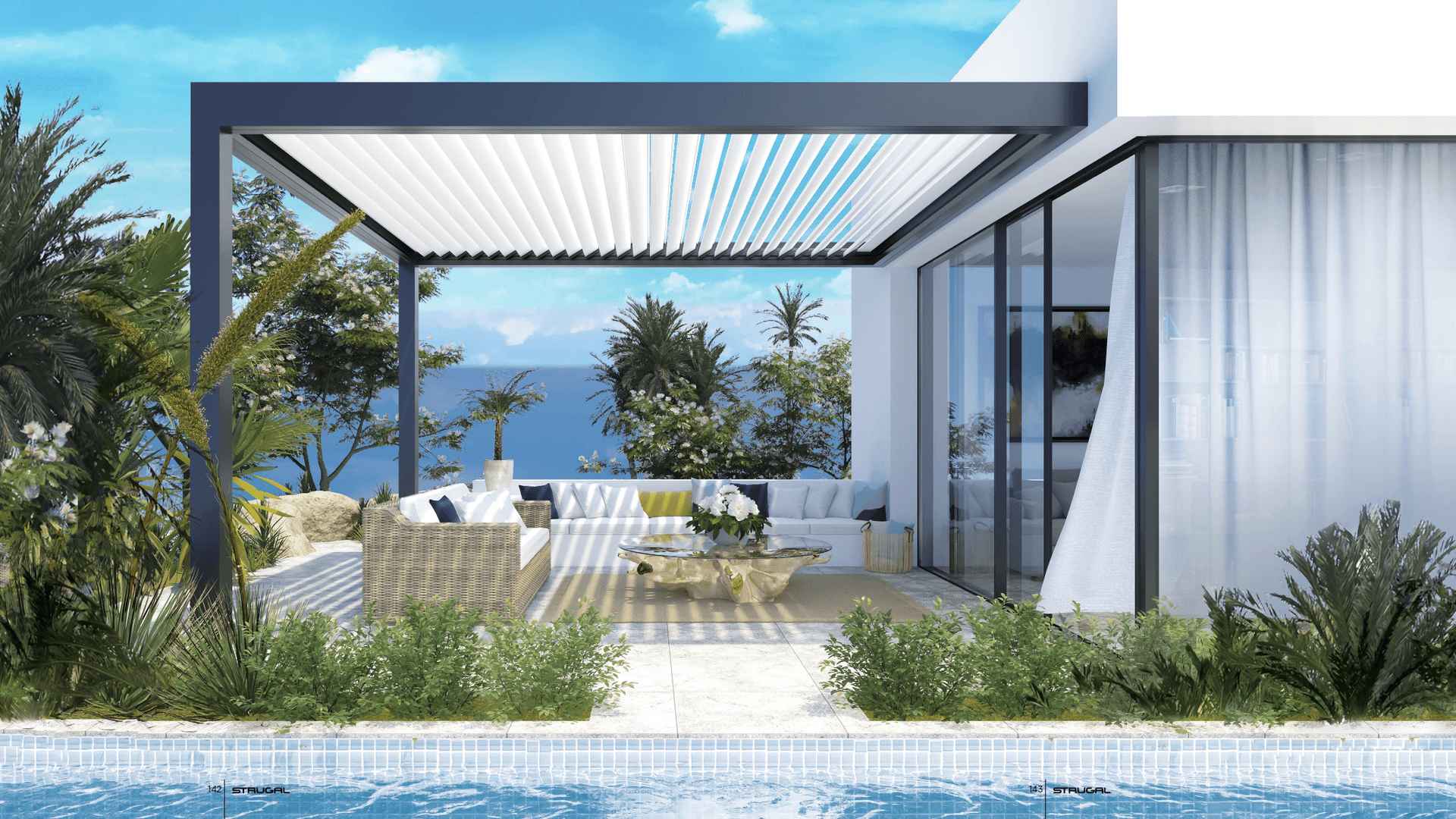
Bioclimatic pergolas
They create comfortable spaces by regulating light and ventilation on terraces and in gardens. They enable automation and climate control. Our bioclimatic structures are custom-made and offer various installation options to adapt to the space and your needs. In all cases, they are weather-resistant, with an aluminum or stainless steel frame.
ST. LIBERTIA
Bioclimatic pergola to create comfortable outdoor spaces all year round. Robust system with integrated drainage and high-quality finishes. Allows for automation and climate control. A solution for high-value projects
Full home automation integration.
Our solutions are compatible with smart management systems. They enable automated control of the building envelope. As a result, shading elements operate in real time, adjusting to changes in the local microclimate
Investing in advanced solar protection means designing for the future: a future where energy efficiency, automation, and profitability converge to create a more sustainable and comfortable home
Discover all our solutions and how they can optimize your next project at STRUGAL Solar Protection. Increase Your Profitability | Aluminum and PVC Windows and Doors | STRUGAL
FAQs

ABOUT Ignacio Domínguez Bautista
Ignacio Domínguez has been leading the company’s sun protection business unit for over 9 years, specializing in strategic management, commercial development, and business growth in the blinds and mosquito screens sector. With a degree in Business Administration, he also completed a Master’s in International Marketing and Foreign Trade at the School of Business and Technology, an education that shaped his focus on commercial expansion and the development of projects aimed at business consolidation and growth.
For 5 years, he combined his professional experience at companies in Madrid and London, working in international environments focused on commercial strategy, customer management, and business development. This period allowed him to gain a global perspective on the market and a clear focus on creating solid and scalable commercial structures.
As head of the sun protection unit, he has led the opening and consolidation of the sun protection products factory located in Ciudad Real, driving the growth of a factory that now produces over 60,000 blinds per year. His approach has been based on combining business vision, strategic planning, and customer focus to make the project a benchmark within the sector.
Six years ago, he also took on the commercial management of the Outdoor business unit, focused on solutions for the exterior of homes. Since then, he has led the commercial development of this division, consolidating steady growth in revenue year after year and expanding the company’s presence into new product lines and markets.
His greatest professional achievement has been participating from the outset in two key projects for the company: the consolidation of Solar Manzanares as a leading center in sun protection and the growth of the Outdoor division, a division that continues to evolve with a clear commitment to innovation, design, and solutions for outdoor residential spaces.
He upholds a clear philosophy: “A company’s growth is not measured solely by numbers, but by its ability to create solid projects, build trust, and deliver long-term value.”
When he isn’t working on new commercial strategies and business development, he closely follows trends in exterior architecture, energy efficiency, and design focused on home comfort.